Reviewed by Dr. Amir H. Jamsheed, DDS
The titanium post in your jaw can last a lifetime, but the crown on top typically needs replacement every 10–15 years — understanding this “component split” changes how you plan for the long-term cost of implants. Maintenance matters enormously: the biological seal around your implant is more fragile than the gum attachment around a natural tooth, and the wrong cleaning technique can quietly invite bacteria to your bone. Here’s what the clinical research actually shows.
 The Three-Part Expiration Date Nobody Tells You About
Most patients hear “dental implants are permanent” and assume that means one procedure, done forever. For Encino-area patients, I want to be more precise with you, because the reality is more nuanced — and knowing it upfront saves you from surprises down the road.
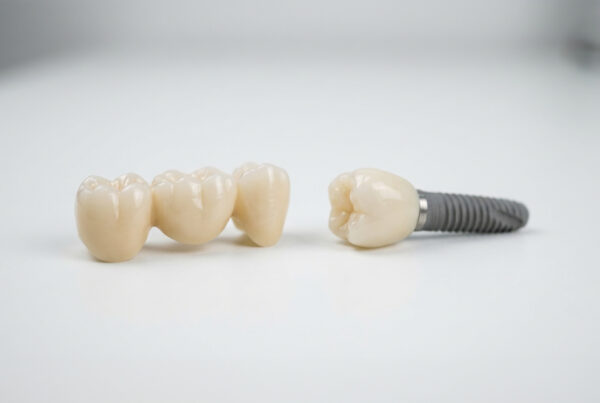
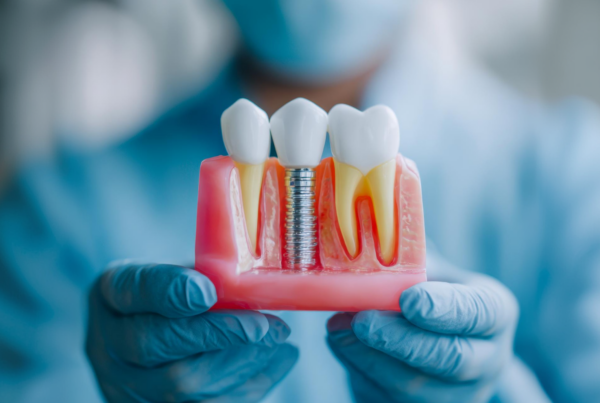
A dental implant has three distinct components, and they age at very different rates.
The titanium post is the closest thing to truly permanent. Research published in PMC tracking implant survival over 20 years found approximately 4 out of 5 implants still functioning at the two-decade mark — and 10-year survival rates consistently exceed 96%. The post fuses directly to your jawbone through a process called osseointegration, and once that bond is established, it’s remarkably durable.
The abutment — the small connector post sitting between the implant and the crown — is a mechanical component. Internal screws can loosen over time from chewing forces. This is usually a simple fix at a routine appointment, but it does require monitoring.
The crown is the component with the most predictable wear timeline. Porcelain and ceramic crowns endure constant grinding, biting, and thermal cycling. Realistically, most crowns need replacement somewhere between 10 and 20 years. According to Cleveland Clinic, while the implant itself can last a lifetime with proper care, the crown attached to it may eventually require replacement due to normal wear.
So when someone asks me “are dental implants permanent?” — my honest answer is: the foundation is. The hardware on top has a lifespan you should budget for.
How Your Medications Can Quietly Undermine a Perfectly Placed Dental Implant
This is a conversation I have with patients far more often than most dental blogs would suggest, and it’s one of the most important gaps in popular implant content.
Osseointegration — the bone-to-implant fusion that makes everything work — isn’t a one-time event. Your bone is constantly remodeling. Any systemic factor that disrupts bone metabolism can affect an implant that’s been stable for years.
Two medication classes deserve specific attention. Proton pump inhibitors (PPIs), commonly prescribed for acid reflux and heartburn, interfere with calcium absorption and can reduce bone mineral density over time. SSRIs used for depression have been associated in clinical literature with altered bone remodeling and higher implant failure rates. Neither of these is a reason to avoid implants — but they are reasons to disclose every medication you’re taking before and after implant placement, and to flag any prescription changes at your maintenance visits.
Similarly, Mayo Clinic notes that certain health conditions affecting bone healing are important contraindications to consider before surgery. What’s less discussed is that new diagnoses — osteoporosis, uncontrolled diabetes, bisphosphonate therapy — arising years after a successful implant can still shift the biological environment around that post.
I tell patients: the implant you got at 50 exists in the body you have at 65. Keep your dentist updated on health changes. It matters more than most people realize.
Protecting the Biological Seal: Why Implant Cleaning Is Different
Here’s where I push back against the generic “clean it like a natural tooth” advice. The mechanics are different, and understanding why changes how you approach home care.
Natural teeth are anchored by Sharpey’s fibers — a dense physical weave connecting the root to the surrounding bone and gum tissue. That connection creates a strong biological barrier against bacteria. Implants don’t have this. Instead, they rely on a circular cuff of soft tissue called the junctional epithelium — a fragile biological seal that keeps bacteria from migrating down to the bone.
If you floss aggressively around an implant in a scrubbing motion, you risk disrupting that seal. The technique I recommend is “cradling” rather than scrubbing: wrap floss in a C-shape around the implant and move it gently up and down in the sulcus — the pocket between the implant and gum — without snapping it against the tissue.
For water flossers, use the lowest effective pressure setting and angle the tip at 45 degrees to the gumline, not straight down into the sulcus. The goal is to flush bacteria out, not blast the tissue seal open.
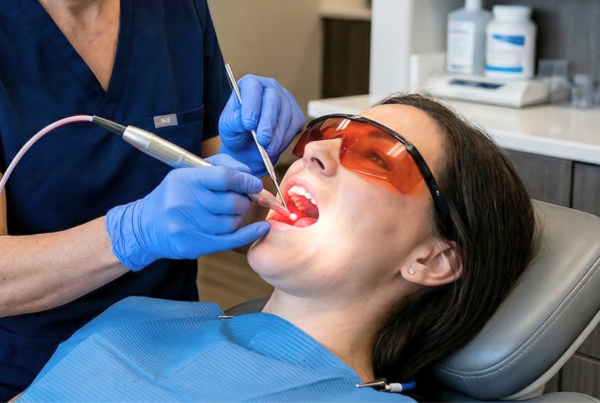
A Healthline overview identifies inadequate oral hygiene and peri-implant disease as leading causes of implant failure — and peri-implantitis (bacterial inflammation destroying the bone around an implant) is almost always preceded by disruption of exactly this soft-tissue barrier. When peri-implantitis does develop, laser treatment for failing implants offers a targeted approach to address the infection and help preserve the implant.
At the professional level, maintenance visits for implant patients look different too. We use non-metal instruments specifically to avoid scratching the titanium surface, because scratches create microscopic grooves where biofilm accumulates. According to WebMD, routine professional care is a key factor in long-term implant success across all age groups. I’d add: the quality of that professional care — not just its frequency — determines the outcome. A strong preventative dentistry routine, including regular professional cleanings tailored to implant patients, is one of the most effective ways to protect your investment long-term.
My recommended home care protocol for implant patients: soft-bristled toothbrush angled at 45 degrees, interdental brushes sized to fit without forcing, gentle C-shaped flossing, and a water flosser on low pressure as a supplement — not a replacement — for mechanical cleaning.
What the Long-Term Data Actually Shows
I want to give you realistic numbers, not marketing numbers.
A systematic review via PMC following nearly 11,000 implants over up to 22 years found high overall survival rates — but also confirmed that preparation and maintenance are the dominant predictors of long-term success. Implants placed in patients with controlled health conditions and consistent maintenance protocols consistently outperformed those without.
Smoking, uncontrolled diabetes, a history of periodontitis, and teeth grinding all meaningfully reduce survival odds. None of these are automatic disqualifiers, but they require specific management strategies before and after placement. For patients with active gum disease, laser gum disease therapy can be an important step in creating the healthy tissue environment implants need to thrive.
For patients in the San Fernando Valley asking me whether implants are “worth it” for the long haul — my clinical perspective is yes, for most people, when the biological environment is properly prepared and maintained. The post can genuinely last decades. The crown will likely need attention in your second decade. Your health changes will matter as much as your brushing.
Plan for the whole picture, not just the surgery day.
Ready to Find Out If Implants Are Right for You?
If you’re in Encino or anywhere in the San Fernando Valley — Sherman Oaks, Tarzana, Studio City — and you have questions about implants, I’d rather you have an honest conversation with me than rely on generic information online. At Encino Dental Studio, we evaluate your bone health, your medical history, and your long-term goals before recommending any treatment. Our full range of restorative dentistry services means we can address whatever your smile needs — from initial placement to long-term maintenance. Schedule a consultation and get answers specific to your situation.
Medical disclaimer: This article is intended for informational purposes only and does not constitute medical or dental advice. Individual clinical outcomes vary. Consult a licensed dental professional for diagnosis and personalized treatment recommendations.