Reviewed by Dr. Amir H. Jamsheed, DDS
Professional teeth whitening can lighten teeth several shades in a single visit, but the immediate result isn’t the full story — dehydration, biological limits, and post-treatment habits all shape what you’ll actually see long-term. Here’s what the science says about realistic timelines, shade changes, and how to protect your results.
 The Shade Change You’ll See — And Why Day 1 Results Are Misleading
Most patients walk out of an in-office whitening appointment genuinely stunned by how white their teeth look. That reaction is real — but it’s also partially temporary.
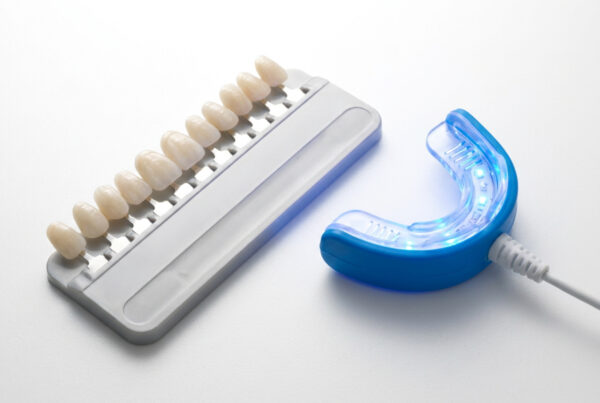
During professional whitening, the high-concentration peroxide gel and light activation generate heat that dehydrates your enamel. Dehydrated teeth lose their natural translucency and appear far more opaque and bright white than they actually are. This is the “dehydration effect,” and it inflates your immediate result by one to two shades beyond where your teeth will actually settle.
Over the next 48 hours, your teeth rehydrate and that shade rebounds slightly — darkening just enough to reach your true stable result. The practical takeaway: don’t judge your whitening outcome until Day 3 or later. Patients who evaluate results on Day 1 often feel disappointed when they notice the shade shift, when in reality their teeth are still beautifully whitened.
So how many shades whiter can you realistically expect? According to WebMD, in-office professional whitening typically brightens teeth three to eight shades. That’s a meaningful range, and where you land within it depends on your starting shade and the density of your staining.
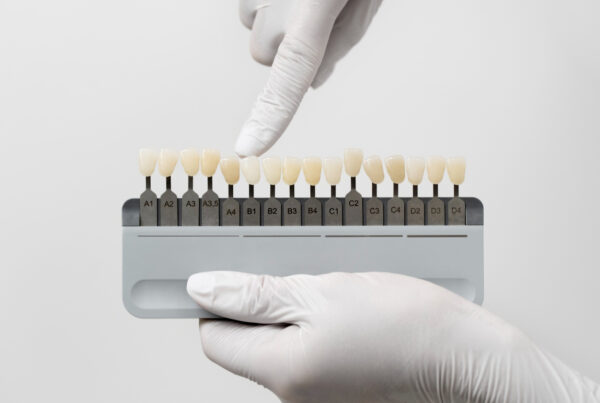
There’s also a biological ceiling worth understanding. Shade guides used in dentistry distinguish between natural shades and bleach shades. B1 is the whitest shade achievable with natural tooth enamel. The “Hollywood white” look — those ultra-bright, almost luminous teeth — falls into the bleach shade category (OM1, OM2, OM3) and typically requires porcelain veneers, not whitening treatments. The ADA notes that peroxide-based treatments work by chemically altering stain molecules, but they cannot push natural dentin past its structural color limit. If your dentin has a naturally darker baseline, even perfect whitening will have a ceiling. Setting expectations around B1 — not OM shades — is the honest benchmark for most patients.
The 48-Hour Porosity Window: Why Post-Treatment Care Matters More Than You Think
Most whitening aftercare advice boils down to “avoid coffee and red wine.” That’s correct, but it significantly undersells why the first 48 hours are so critical.
Professional peroxide treatment does two things simultaneously: it breaks down stain molecules, and it temporarily strips the salivary pellicle — a thin protective protein film that coats your enamel. It also opens the enamel tubules, leaving the surface highly porous and essentially defenseless against new staining compounds.
During this 48-hour porosity window, chromogens (the color pigments in coffee, tea, wine, and tomato sauce) absorb into enamel at a dramatically accelerated rate. A single cup of coffee on Day 1 will cause significantly more permanent staining than that same cup of coffee two weeks later, once the pellicle has fully reformed and the tubules have closed.
Cleveland Clinic explains that temporary sensitivity after whitening is also most pronounced during this window, because the enamel tubules connecting to the nerve are exposed. Avoiding staining foods, hot beverages, and acidic drinks for at least 48 hours isn’t optional — it’s the single highest-leverage action you can take to protect your investment.
Practical guidance for the porosity window:
- Hours 0–24: Water, clear liquids only. No coffee, tea, wine, or colored sauces.
- Hours 24–48: Continue avoiding strongly pigmented foods. Use a straw for any borderline beverages.
- Day 3 onward: Normal diet resumes, but ongoing moderation of heavy staining foods extends your results meaningfully.
For more on the daily habits that support lasting dental health, discover real habits and care that keep your teeth healthy in Encino CA.
How Long Do Professional Whitening Results Actually Last?
The honest answer is: it varies, and your lifestyle is the primary variable. Healthline reports that at-home products may last a few months, while professional dental procedures can extend results up to two to three years.
Mayo Clinic confirms that dentist-supervised take-home tray systems often maintain results for approximately two years with good oral hygiene.
The factors that shorten longevity fastest:
- Regular coffee, tea, or red wine consumption without rinsing afterward
- Tobacco use (both tar and nicotine create deeply embedded staining)
- Skipping routine professional cleanings, which remove surface buildup before it bonds
- Neglecting daily brushing and flossing
Teeth whitening treatments reduce existing stains — they don’t create a permanent stain-resistant surface. Extrinsic stains from food and drink will gradually re-accumulate on anyone’s teeth. The difference is that patients who practice excellent oral hygiene and moderate their staining habits can stretch results considerably longer than those who don’t.
Touch-up treatments — whether a brief in-office session or a dentist-prescribed take-home gel — can refresh results efficiently once they begin to fade. Many patients find that periodic maintenance is far simpler than starting from scratch. If you’re curious about what’s possible with cosmetic dentistry, our smile gallery offers a look at real patient outcomes across a range of treatments.
See What Professional Whitening Can Do for Your Smile
If you’re weighing your whitening options and want a clear picture of what results are realistic for your specific teeth, the best next step is a professional consultation. At Encino Dental Studio, we work with patients across Encino and the broader San Fernando Valley to evaluate stain type, starting shade, and candidacy before recommending any whitening approach. Reach out to contact us to schedule your consultation — we’ll give you an honest assessment and a treatment plan built around your actual goals.
Medical disclaimer: This article is intended for informational purposes only and does not constitute professional dental or medical advice. Consult a licensed dental professional before beginning any whitening treatment.