Reviewed by Dr. Amir H. Jamsheed, DDS
Porcelain veneers typically last 10–15 years, but what drives replacement is often gum recession exposing the margin — not the porcelain itself failing. For deep intrinsic stains like tetracycline banding, whitening alone rarely works, and even translucent veneers require careful opacity planning to prevent show-through.
 What Veneers Actually Look Like After 10 Years (It’s Not What You’d Expect)
Most people assume veneers fail because the porcelain chips or discolors. That does happen — but the more common reason a veneer needs replacing after a decade has nothing to do with the material at all.
It’s your gums.
Natural gingival recession is a biological process. As you age, gum tissue gradually pulls back from the tooth. When this happens around a veneered tooth, it exposes the cement margin — the thin line where the veneer meets the prepared enamel. That exposed margin can appear as a dark edge or gray shadow at the gumline, even when the porcelain itself remains pristine.
This distinction matters enormously. Material aging and biological aging are two separate timelines running simultaneously. Porcelain resists staining and holds its shape well. According to Healthline, porcelain veneers have a strong reputation for longevity, with some research supporting survival rates well beyond a decade. But the aesthetic lifespan — how long they look seamless — often ends earlier due to margin exposure from receding gums. To understand more about what goes into this process, see our guide on understanding dental crowns in Encino CA for related context on how margins and restorations interact over time.
Patients who grind their teeth accelerate both problems. Bruxism stresses the cement bond and contributes to gum inflammation, which speeds recession. A nightguard isn’t optional maintenance; it’s protective infrastructure for your investment.
Composite veneers age differently. The resin material is more porous than porcelain, absorbing staining from coffee, wine, and tobacco over time. Composite may need replacement or touch-up sooner — but the margin exposure issue still applies at the gumline regardless of material.
The practical takeaway: when evaluating veneer longevity, ask your dentist not just about the porcelain’s durability, but about your gum health and recession risk. Those two factors together determine the true aesthetic lifespan.
Stain Type Is Everything: Why Whitening Fails Where Veneers Also Struggle
The standard guidance — “whitening fixes surface stains; veneers fix deep stains” — is useful but incomplete. The reality is more nuanced, especially for patients dealing with tetracycline staining or fluorosis.
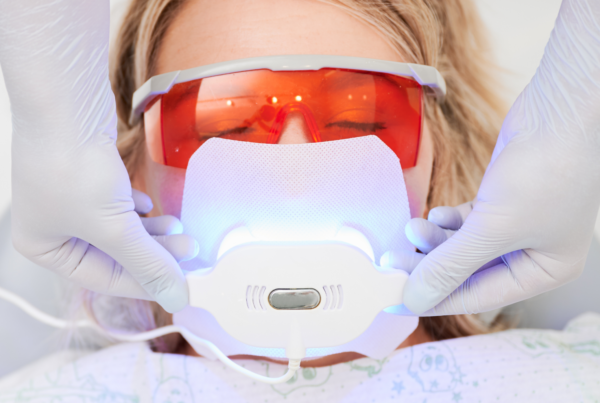
As MouthHealthy explains, whitening simply won’t correct all discoloration. Teeth with gray tones may not respond to bleaching at all. Tetracycline-stained teeth develop dark horizontal banding deep within the dentin — far below where standard peroxide can reach. Specialized extended protocols, sometimes called deep bleaching systems, use high-concentration carbamide peroxide in custom trays over many weeks to penetrate more deeply. These can produce meaningful improvement in mild-to-moderate tetracycline cases.
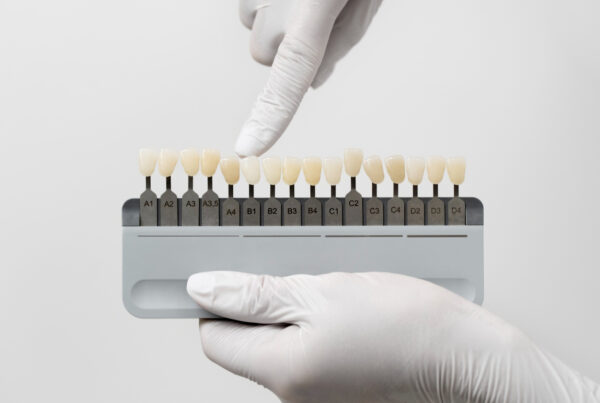
But here’s the critical point most articles skip: severe intrinsic gray or banded staining frequently shows through translucent porcelain veneers. Standard porcelain is designed to mimic natural tooth translucency — which means dark underlying structure can bleed through. Blocking that discoloration requires either more aggressive enamel reduction to create space for opaque layering, or the use of specifically formulated high-opacity porcelain. Both approaches involve tradeoffs. More enamel removal is irreversible. High-opacity porcelain can look less natural in certain lighting.
This creates a practical decision matrix for patients with severe intrinsic staining:
- Mild-to-moderate tetracycline or fluorosis: Extended deep bleaching protocols may be worth attempting before committing to veneers
- Severe banding or gray tones: Veneers are likely necessary, but your dentist must plan for opacity layering — standard translucent porcelain may disappoint
- Surface stains only (coffee, wine, tobacco): Professional whitening is almost always the right first step; veneers are unnecessary
WebMD notes that veneers are specifically indicated for teeth discolored by tetracycline, excessive fluoride, or other internal causes — but the preparation and material selection require careful planning for those cases. Our cosmetic dentistry services cover the full range of these options, from whitening to porcelain restorations. You can also browse our smile gallery to see real patient outcomes across different stain types and veneer cases.
The Long View: How Restoration Choices Compound Over a Lifetime
Here’s what standalone durability figures don’t tell you: each time a restoration fails and needs replacement, more tooth structure is typically removed in the re-prep process. This is the restorative cascade — and it matters for anyone in their 30s or 40s considering veneers for the first time.
Teeth whitening preserves all natural tooth structure. Results fade, but nothing is irreversible. According to WebMD’s overview of teeth whitening, in-office whitening results generally last several months and can be refreshed without any structural consequence.
Composite bonding removes minimal enamel but typically needs replacement or repair within five to seven years. Porcelain veneers require removing roughly half a millimeter of enamel — a permanent alteration. Healthline’s dental veneer overview notes this clearly: once enamel is removed for traditional veneers, the process is irreversible. To learn more about how crowns and veneers compare as long-term restorative solutions, our dedicated service page walks through the key differences.
When a porcelain veneer eventually needs replacement after 10–15 years, the second preparation may require slightly more reduction. After two or three veneer generations over 30 years, a tooth may have lost enough enamel that a full crown becomes the only viable option — covering the entire tooth rather than just the front surface. Crowns require even more aggressive preparation, and that cycle continues.
This progression doesn’t mean veneers are the wrong choice. For patients with significant cosmetic concerns, they remain one of the most transformative options available. But the decision deserves a long-term lens: as MouthHealthy points out, only a licensed dentist should place veneers, and the consultation should include honest discussion of your tooth structure, gum health, and what future replacement scenarios might look like. Maintaining strong gum health throughout is essential — discover real habits and care that keep your teeth healthy in Encino CA for practical guidance on protecting your investment over the long term.
Whitening first, veneer when necessary, and protect what you have — that’s the framework worth considering.
Ready to Find the Right Option for Your Smile?
Whether you’re weighing whitening, veneers, or something in between, the right answer depends on your specific stain type, gum health, and long-term goals. Encino Dental Studio serves patients throughout Encino and the broader San Fernando Valley — including Tarzana, Sherman Oaks, and Studio City. Contact us to schedule a consultation and get a personalized recommendation rather than a one-size-fits-all answer.
Medical disclaimer: This article is for informational purposes only and does not constitute professional dental or medical advice. Always consult a licensed dentist for guidance specific to your oral health needs.