Reviewed by Dr. Amir H. Jamsheed, DDS
Professional whitening uses higher-concentration peroxide under dental supervision, delivering faster, more even results with fewer hidden risks. At-home kits and strips can work for mild staining, but factors like pH levels, saliva interference, and existing dental restorations create complications most product labels never mention. A dentist consultation before whitening is the single most important step you can take. If you’re also curious about the broader picture of oral health, discover real habits and care that keep your teeth healthy in Encino CA for a strong foundation before starting any whitening treatment.
 The pH Problem Nobody Talks About
Most people evaluate whitening products by one number: peroxide concentration. Lower percentage means safer, right? Not necessarily. For Encino-area patients, understanding the chemistry behind these products is essential.
Many over-the-counter strips use highly acidic stabilizers to keep peroxide active on a shelf for 12 months. That low pH can erode enamel even when the peroxide concentration looks modest. According to WebMD, higher peroxide concentrations left on longer dehydrate teeth and increase sensitivity — but acidic pH compounds that damage independently of concentration.
Professional gels are typically chemically buffered to remain pH-neutral. The peroxide is potent, yes, but it isn’t bathing your enamel in an acidic solution between uses. This distinction matters enormously for patients who already have thinner enamel, early erosion, or sensitivity. You might choose a “gentler” 6% strip and unknowingly cause more structural damage than a supervised 35% professional treatment applied once with proper gum protection.
The takeaway: peroxide percentage and pH are two separate safety variables. Professional treatments are engineered to manage both. Most OTC products optimize for shelf stability and price, not enamel chemistry.
The Saliva Barrier and Why Tray Fit Determines Results
Here’s a biological fact that changes how you should think about whitening strips and boil-and-bite trays: human saliva contains the enzyme peroxidase, which breaks down peroxide rapidly. If saliva leaks into a whitening tray or under a strip, the active ingredient is neutralized within minutes — regardless of what the label says about concentration.
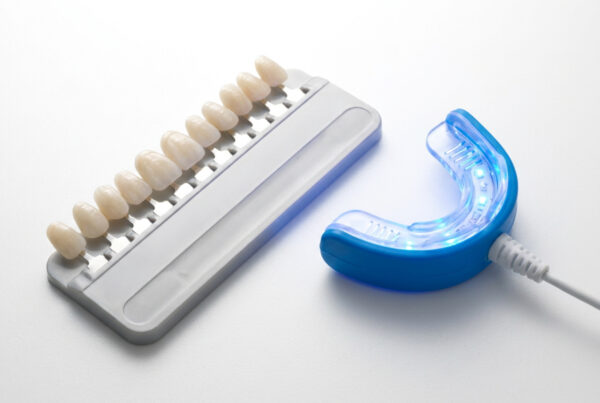
Custom professional trays are engineered with a scalloped gingival margin that seals tightly against the tooth-gum junction. This seal does two things: it keeps the gel in contact with enamel long enough to work, and it prevents gel from migrating onto soft tissue. Generic strips and universal-fit trays allow saliva ingress, which dilutes the gel unevenly. The result is patchy whitening and, paradoxically, gum blanching — a chemical irritation that happens where the gel escapes rather than where it should stay.
A Healthline overview of whitening strips confirms that strips can lighten teeth by a shade or two, but notes that gum irritation and uneven results are common side effects. The engineering of the delivery system — not just the chemistry inside it — drives that variability.
The Restoration Mismatch Risk
Effectiveness isn’t just about how many shades whiter your teeth get. It’s about whether all your teeth respond the same way.
Peroxide-based whitening agents work on natural enamel. They do not change the color of composite resin fillings, porcelain veneers, or dental crowns. As noted by the ADA’s oral health resources, bleaching will not whiten porcelain or tooth-colored composite bonding. If you have anterior (front-facing) restorations and whiten aggressively at home, your natural enamel brightens while existing dental work stays the same shade — or looks darker by contrast.
This “technicolor smile” outcome isn’t a whitening failure. It’s a planning failure. A dentist can audit your mouth before treatment, identify non-responsive surfaces, and map out whether post-whitening restoration replacement makes sense for your goals. That consultation prevents spending hundreds on OTC products only to need cosmetic dentistry re-bonding afterward.
Beyond restorations, research published in PMC confirms that both in-office and at-home bleaching are effective for natural tooth structure, but protocols must account for individual patient factors — stain type, enamel condition, and existing dental work — to predict outcomes accurately.
So Are At-Home Kits Actually Effective?
For mild to moderate extrinsic staining — the kind caused by coffee, tea, or red wine — dentist-dispensed at-home kits with custom trays perform well. According to Healthline’s safety overview of teeth whitening, carbamide peroxide in properly supervised at-home systems is considered a safe whitening method, with most side effects being transient sensitivity that resolves after treatment ends.
The key phrase is dentist-dispensed. Custom trays with professionally formulated gels differ meaningfully from drugstore strips. Over-the-counter products have their place for touch-ups and maintenance, but they consistently underperform for deeper intrinsic staining — discoloration from aging, certain medications, or fluorosis — where professional-strength bleaching or alternative cosmetic solutions are necessary. For patients exploring orthodontic options alongside whitening, learn how you can transform your smile with clear aligners in Encino CA to understand how alignment and whitening can work together.
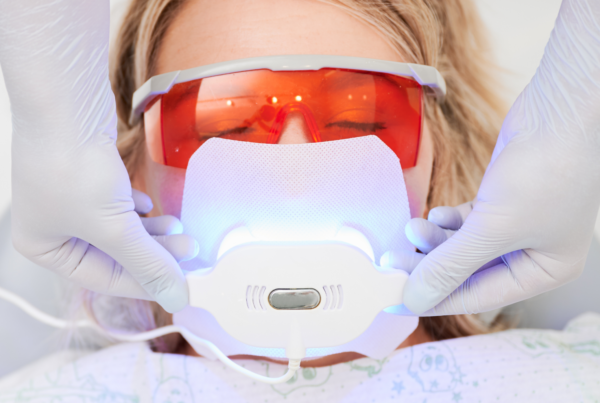
In-office whitening remains the fastest path to significant shade change, with results of three to eight shades achievable in a single visit. At-home professional kits offer comparable long-term outcomes with less chair time. OTC strips offer convenience and mild improvement. The right choice depends on your stain type, dental history, and existing restorations — not just your budget. You can also browse our smile gallery to see real patient results and get a sense of what’s possible with professional whitening.
Ready to Whiten Safely in Encino?
Before reaching for a whitening kit, a brief consultation makes a significant difference. At Encino Dental Studio, we evaluate your enamel condition, existing restorations, and stain type to recommend the whitening approach that delivers real results without hidden risks. Serving patients throughout Encino and the greater San Fernando Valley — including Tarzana, Sherman Oaks, and Studio City — we’re here to help you whiten smarter. Contact us today to schedule your consultation.
Medical disclaimer: This blog post is intended for informational purposes only and does not constitute professional dental or medical advice. Consult a licensed dental professional before beginning any teeth whitening treatment.