Reviewed by Dr. Amir H. Jamsheed, DDS
Not all whitening methods deliver the same results — and some popular options work less effectively than their marketing suggests. This guide breaks down the real differences between strips, LED light kits, whitening pens, and toothpaste so you can make a smarter choice for your smile. If you’re also curious about the broader habits that support a healthy smile, discover real habits and care that keep your teeth healthy in Encino CA.
 The LED Light Kit Illusion: Why Strips Usually Win
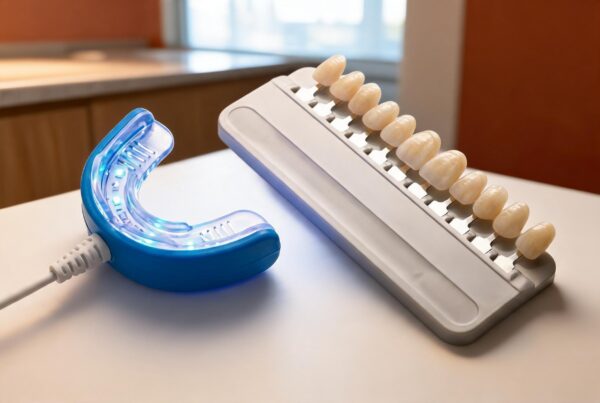
Walk into any pharmacy and the LED whitening kits look impressive. The blue glow feels clinical. But there’s a critical detail most buyers never learn.
A significant portion of the dramatic shade shift you see immediately after an at-home LED session is not true whitening. It’s transient enamel dehydration — the light temporarily dries out your tooth surface, making teeth appear much lighter. Check your shade again 48 hours later after your enamel rehydrates, and you’ll notice a noticeable “rebound” toward your original color.
This happens because consumer-grade blue LED devices operate at far lower milliwatt outputs than professional in-office systems. They lack the power to meaningfully accelerate peroxide breakdown the way clinical lasers and high-intensity lights do. According to Healthline, research on the effectiveness of at-home LED whitening remains mixed — and these kits are also more uncomfortable and significantly more difficult to use than strips.
Whitening strips, by contrast, use a thin polyethylene backing that physically holds hydrogen peroxide or carbamide peroxide against the enamel surface for an extended contact time. That sustained chemical exposure drives genuine oxidation deep into the dentin layer, targeting both extrinsic and intrinsic chromogens. A Healthline review of tested whitening products found Crest 3D Whitestrips delivered dramatic, stable results — while LED kits were ruled out for offering no superior whitening benefit to justify the extra effort or discomfort.
The 48-hour test: After finishing any at-home LED session, photograph your teeth immediately. Then photograph again two days later without using any whitening product. If the shade rebounds significantly, what you witnessed was dehydration — not oxidation.
Strips win this comparison for delivering more consistent, measurable whitening over time.
Do Whitening Pens Work? The Saliva Problem Nobody Mentions
Whitening pens are genuinely convenient. Twist the bottom, paint the gel on, done. But there’s a biomechanical reason they rarely deliver even results — especially on your lower teeth.
Unlike strips, which create a physical moisture barrier between the whitening gel and your saliva, pen gel is applied as an open film directly onto the tooth surface. On upper teeth, this is manageable. On lower anterior teeth, it becomes a real problem. Saliva pools under the tongue and flows freely from the parotid glands, washing pen gel off lower teeth within minutes of application — long before meaningful peroxide penetration can occur.
This means pens are best positioned as a touch-up tool for dry upper incisors before a special event, not as a standalone whitening system. If you’re trying to whiten both arches evenly, a pen alone will likely disappoint.
Healthline’s review of whitening pens notes that carbamide peroxide pens whiten more slowly than hydrogen peroxide options — though slower release can reduce sensitivity. They work best when the tooth surface is dry during application and gel is allowed to set into a film without immediate saliva contact.
The practical takeaway: use a whitening pen to maintain or touch up results you’ve already achieved with strips or professional treatment. Don’t rely on one to transform your smile from scratch. To see what dramatic smile transformations are possible, browse our smile gallery.
Whitening Toothpaste vs. Bleaching: Two Completely Different Mechanisms
This is where many people go wrong — and sometimes make their teeth look worse in the process.
Whitening toothpastes work primarily through mild abrasives and, in some formulas, low concentrations of hydrogen peroxide. They are effective at removing surface pellicle stains — the thin film of discoloration from coffee, tea, or wine that sits on your enamel. The ADA’s mouthhealthy.org notes that stain-removal toothpastes work through the action of mild abrasives that scrub the tooth surface.
But here’s the diagnostic distinction that matters: if your teeth look yellow because of intrinsic chromogen saturation — dentin yellowing from aging, genetics, or past antibiotic use — no toothpaste will fix that. Only peroxide-based bleaching can penetrate enamel and chemically alter the color of dentin. For patients whose discoloration stems from deeper structural issues, crowns and veneers may offer a more comprehensive solution.
Worse, toothpastes with high Relative Dentin Abrasivity (RDA) scores, used aggressively over time, can thin your enamel. As enamel wears down, the naturally yellow dentin beneath becomes more visible — meaning an overly abrasive “whitening” toothpaste can actually make teeth appear yellower over time.
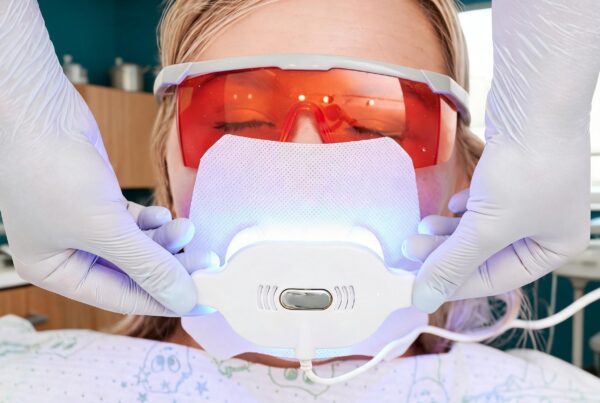
WebMD’s overview of teeth whitening confirms that in-office bleaching systems contain far higher peroxide concentrations than any OTC product, producing results three to eight shades brighter than baseline — something whitening toothpaste simply cannot replicate.
Toothpaste is maintenance. Bleaching is transformation. Know which problem you’re actually trying to solve before reaching for either.
What Delivers the Most Lasting Results?
For mild surface staining, quality whitening strips with proven peroxide concentrations remain the most effective and evidence-supported at-home option. According to the ADA, professional in-office whitening and custom tray systems with professional-strength bleaching gel consistently outperform OTC alternatives — and results from professional treatment can last significantly longer.
Overusing any whitening product carries real risks. Frequent bleaching can increase enamel permeability, cause tooth sensitivity, and in severe cases, contribute to enamel erosion. Moderation and professional guidance matter. Patients looking to address both whitening and structural concerns at the same time may also want to explore cosmetic dentistry options that combine treatments for a complete smile makeover. For those with alignment concerns alongside discoloration, Invisalign orthodontics can be combined with whitening as part of a broader smile improvement plan.
See What Professional Whitening Can Do for Your Smile
If you’re in Encino or anywhere in the San Fernando Valley and want results that actually last, Encino Dental Studio offers professional whitening consultations tailored to your tooth type, stain history, and sensitivity level. Skip the guesswork — contact us to find out which approach is right for you.
Medical disclaimer: This article is intended for general informational purposes only and does not constitute professional dental or medical advice. Always consult with a licensed dentist before beginning any teeth whitening treatment, especially if you have sensitive teeth, dental restorations, or underlying oral health conditions.