Reviewed by Dr. Amir H. Jamsheed, DDS
No prep veneers promise a faster, less invasive smile makeover — but the “reversible” label and low-maintenance reputation both deserve a closer look. Before committing, patients in Encino and the San Fernando Valley should understand the real biomechanical tradeoffs that most marketing glosses over. If you’re exploring your options, our cosmetic dentistry services offer a full range of approaches tailored to your specific needs.
 The “Reversible” Promise Is More Complicated Than You Think
No prep veneers are often marketed as the consequence-free alternative to traditional porcelain veneers. The appeal is real: no enamel removal, no anesthesia, no grinding. According to Healthline, the installation process is simpler because the dentist doesn’t have to alter your natural tooth structure — and the veneers can theoretically be removed.
That last word — theoretically — is doing a lot of work.
When a bonded veneer needs to come off, the cured composite resin cement doesn’t simply peel away. Removing it requires high-speed diamond burs. Even in careful hands, those instruments strip microns of the natural aprismatic enamel layer — the outermost, most mineralized portion of your tooth surface. That glaze cannot regenerate. Once it’s gone, your tooth is permanently altered, even if the veneer itself was “prepless.”
The alternative is an Erbium (Er:YAG) hard-tissue laser, which can de-bond veneers with significantly less collateral damage to enamel. However, this equipment is specialized and not universally available. Patients rarely ask about removal protocols before placement — and that oversight can be costly when they want a change years later.
The honest clinical framing: no prep veneers should be treated as semi-permanent, not reversible. Cleveland Clinic notes that even minimal-prep veneers still require some enamel removal, and candidacy should always be evaluated carefully by a licensed dentist.
The Gumline Risk That Nobody Warns You About
Here is a structural issue that almost never appears in patient-facing content: the gingival ledge effect.
Traditional veneers require enamel reduction precisely so the veneer margin sits flush with the natural tooth contour. When no enamel is removed, the veneer sits on top of the tooth surface. That creates an overcontoured emergence profile — a microscopic physical ledge at the gumline where the veneer meets the tooth.
This ledge acts as a plaque trap. Bacteria accumulate in the shelf, floss snags or shreds at the margin, and chronic localized gingivitis can develop even in patients with otherwise excellent hygiene. Over time, the bacterial environment shifts toward acid-producing species, and root-surface caries — decay at or below the gumline — becomes a genuine risk. Root-surface rot is structurally different from coronal enamel decay: it progresses faster and is harder to restore. In cases where gum disease has already taken hold, laser gum disease therapy can address the underlying infection before any cosmetic work is considered.
A simple self-check: run clean dental floss slowly through the contact point of a no prep veneer. If the floss snags, tears, or requires significant force, there is likely a marginal overhang. That’s a signal to bring up with your dentist promptly.
WebMD confirms that while no prep veneers are effective for small gaps and mild cosmetic concerns, patients should always verify candidacy with their provider — because the fit and marginal integrity vary significantly by case.
Why Stained Teeth Can Complicate No Prep Results
Ultra-thin no prep porcelain — typically 0.2 to 0.3 millimeters — transmits light rather than blocks it. That optical property is what makes well-placed veneers look natural. But it also means the underlying tooth shade shows through.
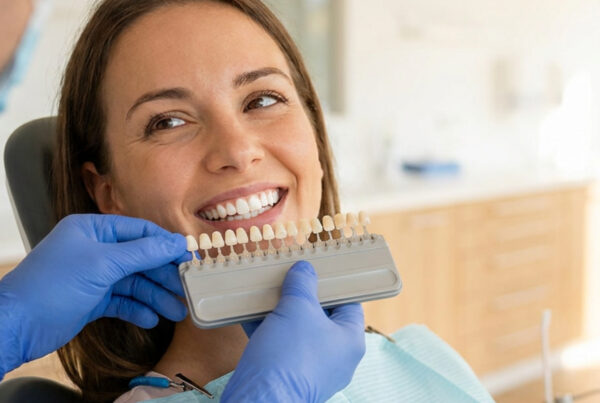
For patients with mild discoloration, this is manageable. For patients with tetracycline staining, fluorosis banding, or a darkened tooth from a previous root canal, the translucency becomes a clinical problem. Blocking a dark underlying shade through 0.3mm of porcelain requires heavy opaquers — and opaqued veneers look thick, flat, and artificial. The “chiclet” effect is real, and it is a direct consequence of mismatched indication.
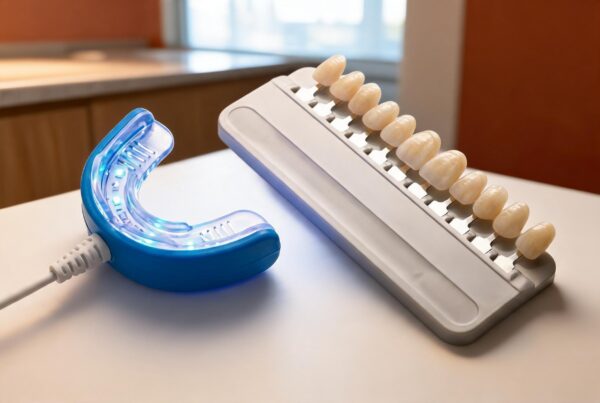
The workaround often involves intensive professional bleaching before veneer placement, adding both time and complexity to the treatment plan. In more severe staining cases, traditional prep veneers — which are thicker and can incorporate opacity more naturally — may produce a far better outcome with fewer treatment steps. Exploring crowns and veneers together can help clarify which restorative approach best matches your underlying tooth shade and cosmetic goals.
A Healthline overview of veneer longevity notes that porcelain veneers applied to teeth that weren’t appropriately prepared in advance show shorter lifespans — a finding that applies directly to mismatched material choices. Mouthhealthy.org from the ADA reinforces that shade selection and tooth preparation are interconnected decisions that require professional guidance.
The practical takeaway: if your primary concern is discoloration — especially moderate to severe staining — have an honest conversation with your dentist about whether prepless porcelain can actually achieve the result you want, or whether a different approach will get you there without a second round of treatment.
What Actually Makes Someone a Good Candidate
No prep veneers are genuinely excellent for the right patient. The issue is that “right patient” is narrower than most advertising implies.
Strong candidates typically have:
- Teeth that are already close to the desired shape and size
- Mild chips, small gaps, or surface texture irregularities
- Healthy gums with no existing periodontal disease
- Light underlying tooth shades
- No active decay or large existing restorations
Patients with significant size discrepancies, bite issues, heavy grinding habits, or deeper discoloration will likely see better long-term outcomes with traditional veneers or other restorative options. Grinding in particular is a serious concern — Healthline’s overview of dental veneers notes that a night guard is often recommended to protect veneers from bruxism-related fracture. For patients who are also considering orthodontic alignment before veneer placement, learning how you can transform your smile with clear aligners may be a valuable first step. You can also browse our smile gallery to see real patient outcomes across a range of cosmetic treatments.
The bottom line is that no prep veneers are a legitimate cosmetic tool with real advantages — minimal chair time, no anesthesia, preserved tooth structure in the right case. But the tradeoffs around marginal fit, stain-blocking limitations, and the realities of removal deserve transparent discussion before any decision is made.
Ready to Find Out If No Prep Veneers Are Right for You?
Encino Dental Studio serves patients throughout Encino and the broader San Fernando Valley, including Tarzana, Sherman Oaks, and Studio City. Dr. Amir H. Jamsheed, DDS, provides personalized veneer consultations that go beyond the marketing — evaluating your tooth shade, gumline health, bite, and cosmetic goals to recommend the approach that will actually deliver lasting results. Contact us to schedule your consultation today.
Medical disclaimer: This article is intended for informational purposes only and does not constitute professional dental or medical advice. Always consult a licensed dental provider for diagnosis and treatment recommendations specific to your situation.