Reviewed by Dr. Amir H. Jamsheed, DDS
Root canal treatments can last a decade or longer, but the 10-year mark brings specific risks — including silent bone loss, brittle dentin, and crown failure — that patients rarely hear about. Understanding what changes inside a non-vital tooth over time helps you protect that investment for the long haul.
 The Silent Threat: Why a Painless Root Canal Isn’t Necessarily a Healthy One
This surprises most patients. Because the nerve has been removed, a failing root canal often produces zero pain. None. You might assume everything is fine right up until a dentist spots significant bone loss on an X-ray.
Here’s the biology: after root canal therapy, the tooth is non-vital. Bacteria can slowly colonize micro-canals and accessory canal branches — tiny anatomical spaces that even thorough cleaning can miss. Research published in PMC confirms that accessory canals are often too narrow to detect on standard X-rays, and residual organic material in these spaces can sustain low-grade infection for years. The surrounding bone quietly erodes. The patient feels nothing.
Standard 2D dental X-rays frequently miss this. They flatten a three-dimensional structure into a single image, obscuring early-stage periapical changes. At the 10-year mark, a CBCT (Cone Beam Computed Tomography) scan gives your dentist a true 3D view of bone density around the root tips — making it the most meaningful diagnostic tool available for evaluating a decade-old root canal. If you have a root canal that’s approaching or past 10 years, ask your dentist specifically about 3D imaging at your next visit. Don’t rely solely on “how the tooth feels.” You can also discover real habits and care that keep your teeth healthy in Encino CA to support long-term outcomes between visits.
This isn’t a reason to fear root canal therapy. It’s a reason to stay current with follow-up care.
How Successful Is Root Canal Treatment — and What Does “Success” Actually Mean?
The numbers are genuinely encouraging. According to Healthline, root canals are performed over 15 million times annually in the United States, and they remain one of the most reliable ways to preserve a natural tooth threatened by infection or severe decay.
But “success” in endodontics is measured in layers. Clinical success means no pain, no swelling, no sinus tract. Radiographic success means the bone around the root has healed. Tooth survival simply means the tooth is still present and functional — regardless of whether there’s any lingering disease.
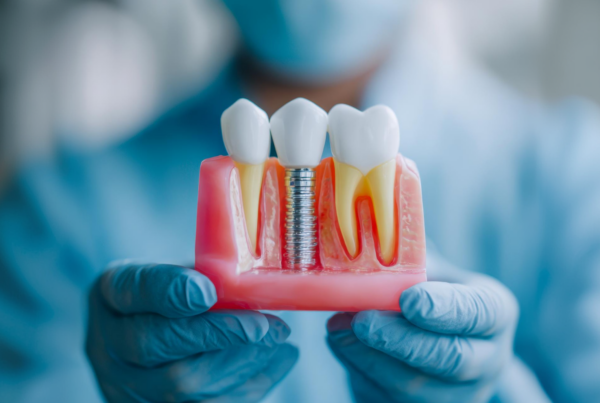
A Healthline overview notes that the procedure removes damaged pulp tissue and seals the tooth to prevent bacterial re-entry. When that seal holds and a proper crown is placed, outcomes are strong. One large study cited in research published in PMC found that teeth receiving both a filling and a crown after root canal treatment had a median survival time of over 20 years — significantly longer than teeth receiving no protective restoration. Teeth with no crown and no filling survived a median of just 6.5 years.
The single most important factor in long-term root canal success isn’t the procedure itself. It’s what covers the tooth afterward.
Failure does occur — estimates range from 7% to 18% of initial treatments — and when it does, re-treatment or apicoectomy are often viable options rather than extraction. To learn more about how restorative dentistry in Encino CA can address these situations, it’s worth discussing all available options with your dentist.
Dentin Dehydration and the Fracture Risk Nobody Warns You About
A root canal doesn’t just remove infection. It removes the tooth’s internal blood and moisture supply permanently. Over 10 years, that matters structurally.
Non-vital dentin becomes progressively drier and more brittle. It loses the micro-elasticity that living teeth have — the subtle flex that absorbs chewing forces without cracking. Harvard Health notes that even after successful root canal therapy, the tooth remains susceptible to decay and physical stress. What that article doesn’t fully explore is the 10-year timeline of dentin dehydration and its mechanical consequences.
Vertical root fractures (VRF) are the end result. These are catastrophic, irreparable, and almost always lead to extraction. They develop from microscopic cracks that accumulate over years of chewing forces on dehydrated dentin. Molars — which bear the heaviest bite load — are at highest risk.
Two things meaningfully reduce this risk:
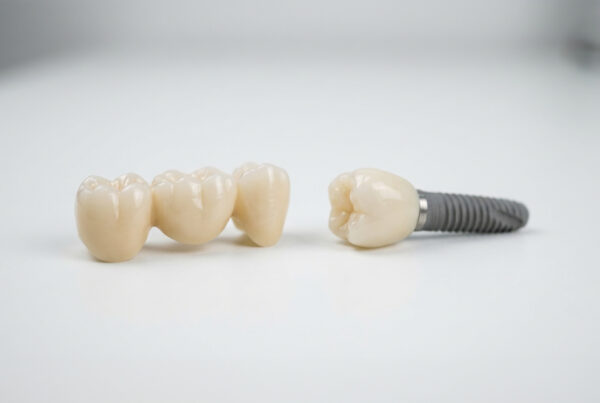
Full-coverage crowns over simple fillings. A crown distributes occlusal stress across the entire tooth surface rather than concentrating it at a central filling margin. For molars especially, this isn’t optional — it’s essential for survival past the decade mark. Understanding dental crowns in Encino CA can help you make an informed decision about the right restoration for your treated tooth.
Fiber posts when appropriate. In teeth with significant coronal structure loss, a custom fiber post placed in the canal space helps distribute chewing stress along the root rather than focusing it at one point. This doesn’t apply to every root canal case, but your dentist should evaluate post placement whenever crown-to-root ratios are a concern.
If your 10-year-old root canal sits under a large filling rather than a crown, that conversation with your dentist is overdue.
The Crown Replacement Problem at Year 10
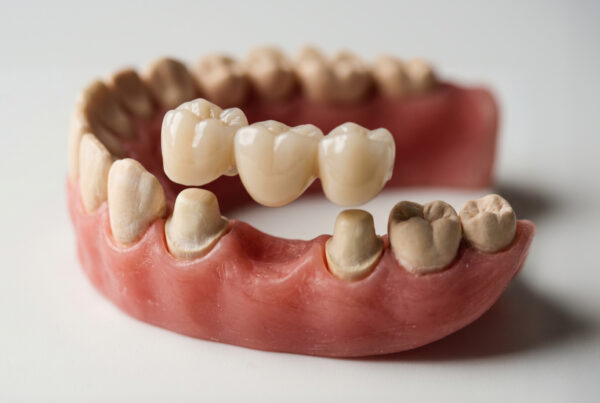
Most dental crowns last 10 to 15 years. Which means a successful 10-year-old root canal may be housed under a crown that’s approaching the end of its functional life. That creates a specific, underappreciated vulnerability.
When an old crown is removed and the tooth is prepared for a new one, the underlying tooth structure — including the old gutta-percha filling material sealing the root canal — is temporarily exposed. If the tooth sits under a temporary crown for any extended period, or if the prep process isn’t carefully managed, bacteria can penetrate the coronal seal. According to MouthHealthy from the American Dental Association, the quality of the coronal restoration is directly tied to the long-term outcome of root canal treatment. When that restoration degrades, the root canal underneath becomes vulnerable regardless of how well the original procedure was performed.
Questions worth asking your dentist during a crown replacement on a root canal tooth:
- Will a rubber dam be used during preparation to prevent bacterial contamination?
- How long will the tooth be under a temporary crown, and what sealant will be used underneath it?
- Should the gutta-percha be inspected or refreshed before the permanent crown is seated?
These aren’t unreasonable questions. They’re exactly the kind of proactive conversation that separates a 20-year outcome from a 10-year one. If you’re also concerned about gum health around a treated tooth, laser gum disease therapy offers a minimally invasive option for addressing periodontal issues that can compromise long-term root canal success. You can also browse our smile gallery to see the results our patients have achieved with comprehensive restorative care.
Ready to Check on Your Root Canal’s Long-Term Health?
If you have a root canal that’s approaching or past the 10-year mark — or if you’re in the San Fernando Valley and simply haven’t had a thorough endodontic evaluation recently — the team at Encino Dental Studio is here to help. Serving Encino, Tarzana, Sherman Oaks, and Studio City, we take a comprehensive approach to monitoring root canal-treated teeth, including advanced imaging when appropriate. Don’t wait for pain to tell you something is wrong. Book your evaluation today.
Medical disclaimer: This article is for informational purposes only and does not constitute professional dental or medical advice. Always consult a licensed dental professional for diagnosis and treatment recommendations specific to your situation.