Dental implants are the gold standard for replacing missing teeth, but they carry real mechanical and biological risks that most patients never hear about. Two of the most underreported concerns involve how a rigid implant interacts with neighboring natural teeth and what happens to your jawbone over decades. Understanding these risks helps you make a genuinely informed decision. To discover laser treatment for dental implants in Encino CA and how modern techniques address these concerns, it helps to start with the biomechanics.
 The Hidden Biomechanics Problem: How a Rigid Implant Can Stress Your Neighboring Teeth
Most people know implants fuse to bone. Fewer people understand what that rigidity actually means for the teeth sitting right next to them.
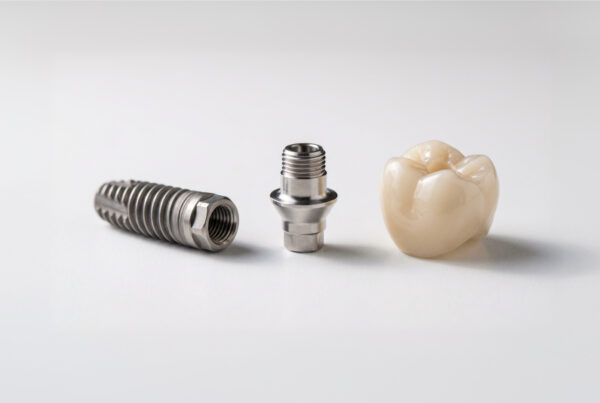
Natural teeth are not anchored directly to bone. They’re suspended by a periodontal ligament (PDL) — a thin, elastic tissue that acts like a microscopic shock absorber, allowing each tooth to flex slightly under biting force. An implant has no PDL. Once osseointegration is complete, the implant is essentially welded to the jawbone with zero give.
Here’s where the problem emerges. When you bite down hard or clench, the implant doesn’t budge. Your adjacent natural teeth, still suspended by their flexible PDL, are forced to absorb the lateral forces that the implant deflects. Over time, this mismatch creates a condition dentists call hyperocclusion — where the implant sits slightly too high in the bite and repeatedly traumatizes the neighboring teeth with every chew.
The result? Adjacent healthy teeth can feel sore, sensitive, or even slightly loose. This isn’t the implant “pushing” teeth in a visible way — it’s cumulative microtrauma from years of unequal force distribution.
The fix is precise occlusal adjustment: carefully shaving down the bite contact points on the implant crown so forces distribute evenly. This is a routine part of implant follow-up care, but it requires regular monitoring. As the American Academy of Periodontology explains, implants integrate with the jawbone itself — which is exactly what makes this biomechanical tension possible.
Patients who grind their teeth (bruxism) face a compounded risk. The rigid implant becomes an unyielding anchor point during grinding episodes, and neighboring teeth take the full brunt of that force. A custom nightguard is often essential for implant patients with any parafunctional habits.
The Long-Term Drift Problem: Why Your Implant Can Look “Sunken” After a Decade
This is one of the least-discussed downsides of dental implants, particularly for younger patients.
The human jaw doesn’t stop changing after your 20s. Natural teeth slowly continue to erupt and drift throughout adulthood — tiny movements, but they accumulate over decades. Because an implant is fused to the bone, it cannot move. It stays exactly where it was placed while everything around it slowly shifts.
The clinical term for this is infraocclusion — when the implant crown ends up sitting lower than the biting plane of surrounding teeth. On a 10-to-20-year horizon, the implant can appear visibly shorter, or “sunken,” compared to neighboring teeth. Beyond the cosmetic problem, infraocclusion creates deep food-packing traps between the implant crown and adjacent teeth — gaps that are genuinely difficult to clean and that accelerate decay in the neighboring natural teeth. Understanding dental crowns in Encino CA — including how crown design interacts with adjacent teeth over time — is an important part of planning for these long-term outcomes.
This concern is most acute for patients who receive implants in their teens or early 20s, but it affects adults of all ages given enough time. According to Cleveland Clinic, proper care can allow implants to last a lifetime — but that longevity also means the implant will be present through all the jaw changes your face undergoes over those decades.
For patients in Encino and the broader San Fernando Valley considering implants at a younger age, this long-term structural consideration is worth a detailed conversation with your provider before placement.
Peri-Implantitis: The Silent Infection That Destroys Bone Faster Than Gum Disease
Natural teeth have a built-in early-warning system. The periodontal ligament and Sharpey’s fibers — perpendicular collagen bundles that attach the tooth root to the surrounding bone — create a physical barrier against bacterial invasion. When gum disease begins around a natural tooth, nerve endings signal discomfort early, and the collagen barrier slows bacterial penetration.
Implants have neither of these defenses. The soft tissue seal around an implant is weaker and more permeable than the attachment around a natural tooth. Bacteria that breach it can travel directly down the implant’s screw threads and attack bone — with no pain signal until significant damage is done.
This condition is called peri-implantitis, and WebMD notes it can cause inflammation, bleeding, infection, and bone loss. What makes it particularly dangerous is the speed of progression. Without the protective collagen architecture of natural teeth, peri-implantitis can destroy bone at roughly double the rate of conventional periodontitis — often silently. Laser gum disease therapy represents one of the most effective modern approaches for treating this type of infection before irreversible bone loss occurs.
Patients frequently describe the first symptom as a dull ache or pressure that appears years after a successful surgery. By the time pain is noticeable, irreversible bone loss has often already occurred.
The diagnostic standard to catch it early requires annual probing around each implant and baseline digital X-rays at regular intervals — not just a visual check. If your dental provider isn’t probing your implant sites at every hygiene visit, ask them to start.
Weighing the Pros: What Implants Do Better Than Any Alternative
None of the above means implants are a poor choice. For most patients with sufficient bone and good systemic health, they remain the most durable, functional tooth-replacement option available.
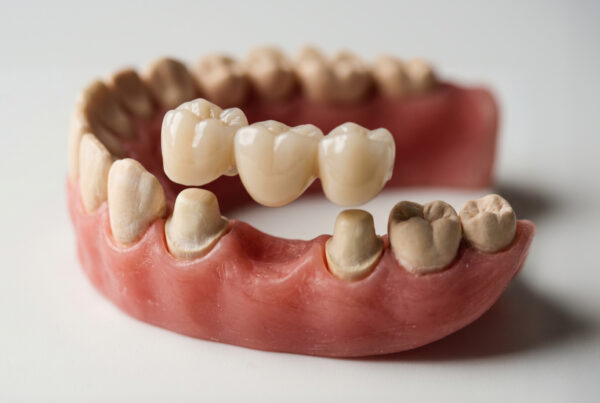
Healthline’s overview of dental implant benefits cites survival rates of 96.8% at 10 years and 94% at 15 years — figures that far exceed bridges or dentures over the same period. Unlike bridges, implants don’t require grinding down adjacent healthy teeth to create support. Unlike dentures, they preserve jawbone by stimulating the bone the way a natural root would. To learn the uses and benefits of restorative dentistry in Encino CA, including how implants compare to other tooth-replacement options, is a valuable step before committing to any treatment plan.
Mayo Clinic outlines that implants are best suited for patients with adequate bone density, healthy oral tissues, and no conditions that impair healing — including uncontrolled diabetes, active gum disease, or heavy smoking.
For the right candidate, the benefits are real and lasting. The key is understanding that “right candidate” involves more than just having a missing tooth — it requires an honest assessment of bite mechanics, long-term jaw anatomy, and ongoing maintenance commitment. Discover real habits and care that keep your teeth healthy in Encino CA to ensure your implant and surrounding teeth stay in optimal condition for the long term.
Ready to Get an Honest Assessment in Encino?
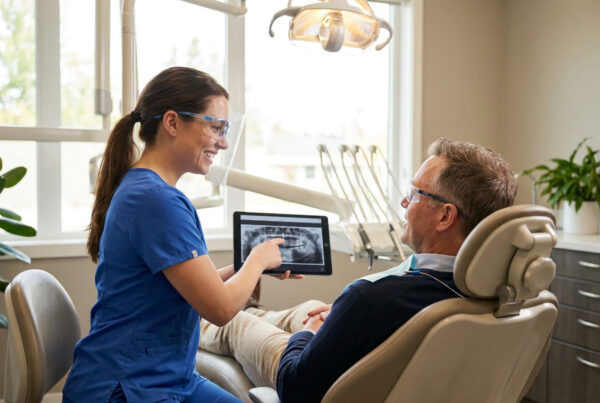
If you’re weighing dental implants and want answers that go beyond the brochure, Encino Dental Studio provides thorough implant consultations for patients throughout Encino and the San Fernando Valley. Dr. Amir H. Jamsheed, DDS, evaluates your bone structure, bite mechanics, and long-term candidacy — so you understand every upside and every risk before you commit. Contact us today to schedule your consultation.
Medical disclaimer: This article is for informational purposes only and does not constitute medical or dental advice. Always consult a licensed dental professional for diagnosis and treatment recommendations specific to your situation.